A court that plays true for decades starts underground.
The pad is the product. Most of your budget and nearly all of the quality is base and concrete work you will never see again. We build from the ground up, with the base, drainage, and surface planned together.
The 2-minute project requestTalk through your project with our team
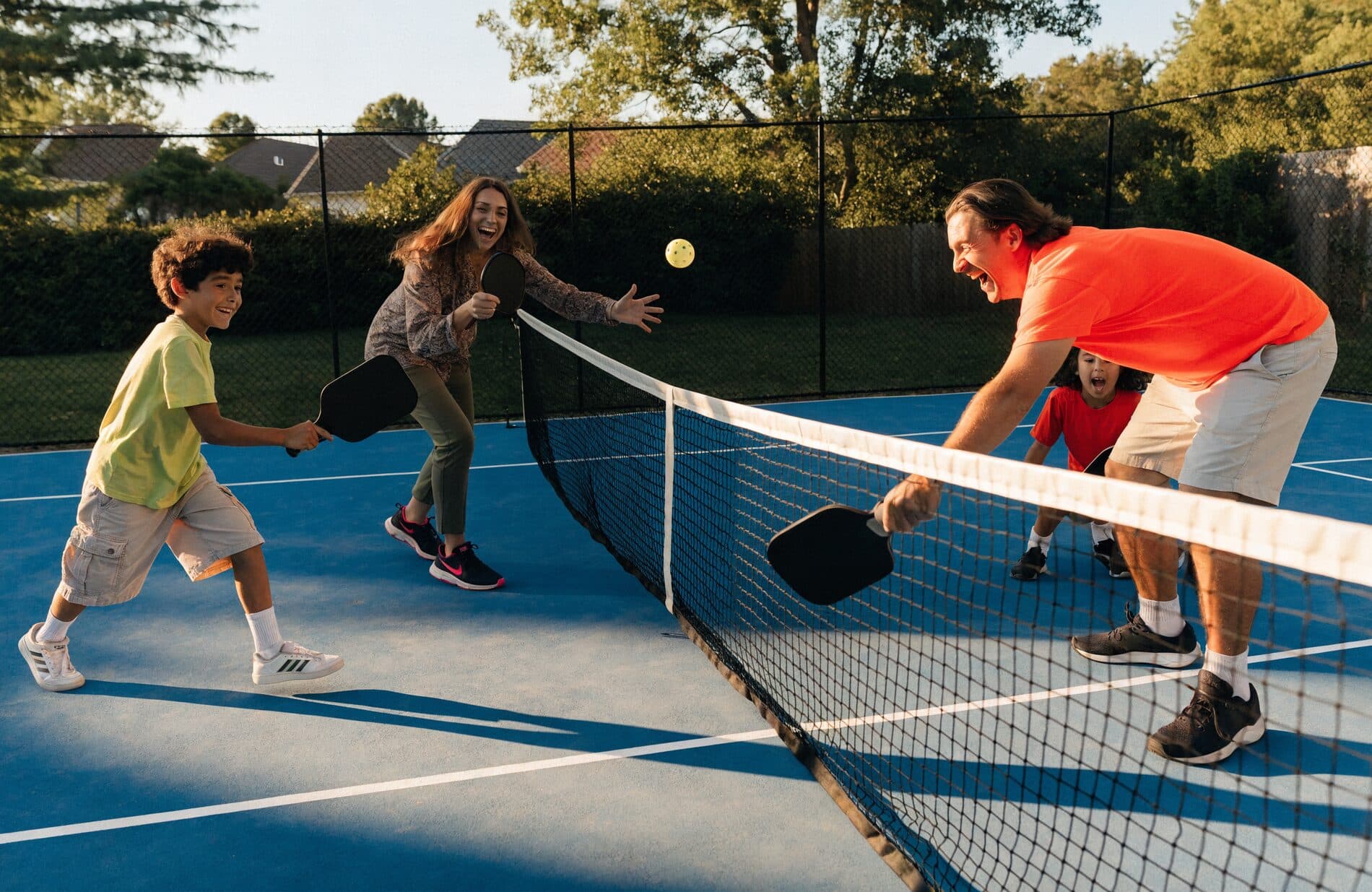
- 1Base: compacted ground and the concrete pad
- 2Surface: acrylic, tile, or turf on top
- 3Play: lines, net, hoop, fence, light
The court you see is the thin part. The court you bought is underneath.
An acrylic playing surface is millimeters thick. Everything that decides whether your court cracks, puddles, or plays true is the base and concrete below it, built once, then buried forever. So that is the part we obsess over, in every guide and every builder we vet.
Earn the ground
Excavation, compacted aggregate, reinforcement, a clean pour, and a deliberate drainage slope. Most of the budget lives here, and every failure starts here.
Choose the skin
Acrylic color systems, cushioned layers, modular tiles, or synthetic turf. Each has honest tradeoffs in feel, upkeep, and price, and each rides on the pad.
Set the game
Lines to the real rulebook dimensions, net posts set in concrete, the hoop, fencing, and lighting. The visible layer, and honestly the easy one.
What a court actually is, from the dirt up.
- 1Compacted subgrade. The native ground, cut level and compacted so nothing settles later. Settling is where cracks are born.
- 2Aggregate base, 4 to 6 inches typical. Crushed stone, compacted in lifts, so water drains and the slab bears evenly.
- 3Reinforced concrete pad, 4 inches typical. Poured with about a 1 percent fall so rain leaves instead of pooling, then cured about 28 days before any coating.
- 4The acrylic system. Resurfacer, color coats, and line paint, or tiles or turf instead. Millimeters thick, and only as good as the pad below it.
- 5Net, fence, hoop, light. Set to the real rulebook dimensions, with posts and footings planned before the pour, not after it.
Pick the project. We already did the homework.
Typical published ranges, so you can budget like an adult before anyone quotes you. Your site and your region set the real number, which is exactly what quotes are for.
Backyard pickleball court
$20k to $45k typical new build, concrete plus acrylic
A 30 x 60 ft pad fits the full 20 x 44 court with real run-off room. Site work is the swing factor.
Read the cost guideBackyard putting green
$15 to $40 per sq ft typical, synthetic, installed
Synthetic wins backyards for a reason: a real bent-grass green is a part-time job. We explain both honestly.
Read the green guideBasketball, hoop to half court
$500 to $35k from in-ground hoop to full half court
An in-ground hoop is a footing, a cure, and a level rim at exactly 10 ft. A half court is a real concrete project.
Read the hoop guideTennis court resurfacing
$4k to $12k typical standard acrylic resurface
Acrylic courts typically want resurfacing every 4 to 8 years. Structural cracks are a different conversation, and we teach the difference.
Read the resurfacing guideWhatever the project, same promise. Your court, built by our team.
From your first idea to the final lines.
Work directly with our team from the project request through planning and construction. Here is how we get started.
Tell us the project once
Sport, space, surface, budget, ZIP. Two minutes, no phone call, and our free tools help you know what you actually want first.
We review the site and scope
Our team confirms your service area, discusses the property, and reviews the base, drainage, surface, and access needed to prepare your construction quote.
We build your court
Once the scope, price, and schedule are agreed in writing, our team takes the project through the ground work, playing surface, and finishing details.
The lines are the last inch of a three-foot decision.
By the time the color goes down, your court's fate was already decided in the excavation, the base, the pour, and the cure. Plan those first and the pretty part takes care of itself.
Honest about the concrete, and about ourselves.
A plan for your property
We start with your site: space, slope, drainage, and access. Those conditions shape the build and the quote before we talk about paint colors.
A clear scope and written quote
You work with our build team on the materials, scope, and price. Construction terms belong in your written agreement, so you know what is included before work starts.
The homework is public
Our cost ranges, dimension specs, and build checklists are free whether or not you ever send a request. Sourced to the real standards bodies, linked so you can check us.
Bring your questions about drainage, materials, access, or budget. We will walk through the decisions that shape your court and explain them in the project scope.
Questions homeowners actually ask.
How much does a backyard pickleball court cost?
For a new build on a fresh concrete pad with an acrylic surface, published contractor ranges typically run from the low twenties to the mid forties in thousands of dollars, and site work is what moves the number most. A flat, accessible yard is the cheap end; slopes, poor soil, drainage work, and long concrete-truck runs push it up. Our free Court Cost Calculator walks the honest ranges by sport, size, and surface, and local quotes are always the real answer.
Why do you keep saying the pad is the product?
Because it is. The playing surface you see, the color coats and lines, is a thin acrylic system riding on a concrete pad, and that pad is most of the budget and nearly all of the quality. Cracks, low spots that puddle, and bad slope all come from base and concrete work, and none of them can be fixed with paint. A court built on compacted base, proper reinforcement, and a clean 1 percent style drainage slope plays true for decades. One built on a cheap pour looks identical on day one and fails in year two.
Do I need a permit for a backyard court?
Very often yes, and it varies by municipality. Concrete flatwork above a certain size, fencing, retaining walls, drainage changes, and lighting each can trigger permits or setback rules depending on where you live. Typical practice is to check with your local building department before any excavation, and a good builder handles this as part of the job. We flag it in every guide because skipping it is the most expensive shortcut in this category.
Is HomeCourtPath a construction company?
Yes. HomeCourtPath builds backyard courts and putting greens, installs basketball setups, and resurfaces tennis courts. Your project request goes to our team so we can discuss your site, prepare a scope, and quote the work directly.
How is my project priced?
Construction is priced for your property and agreed scope. Size, slope, drainage, equipment access, surface, and finishing details all affect the quote. Our guides and tools are free planning resources; a written project quote sets the actual construction price.
Can you build in my area?
Share your ZIP code and project details. Our team will confirm whether your property is within our service area and discuss availability before moving ahead.
How long does a backyard court take to build?
Typical new concrete-pad builds run a few weeks of actual work, but the calendar time is longer for a reason worth knowing: new concrete needs to cure, and acrylic surface manufacturers typically call for about 28 days of cure before coatings go on. So a common honest schedule is excavation and base one week, concrete pour, then a several-week cure gap, then surfacing and lines in a few days. Weather and permitting add slack. Anyone promising paint the week after the pour is cutting a corner you will pay for later.
Can my sloped yard still take a court?
Usually yes, but slope is the single biggest cost variable. A court needs a near-flat plane with a slight, deliberate drainage fall, so a sloped site means cut and fill, sometimes retaining walls, and more drainage work. That can add five figures on a steep lot. It is exactly the kind of thing a site visit settles, which is why we collect your project details and have our team assess the actual ground.
Three tools that do the budgeting homework.
Court Cost Calculator
Pick the sport, size, and surface and get an honest typical range with the cost drivers spelled out.
Court Dimensions Planner
Enter the space you actually have and see which courts fit, regulation and backyard sized.
Surface Comparison Tool
Acrylic, cushioned acrylic, modular tiles, and turf, compared honestly on feel, upkeep, and price.
Build it once. Build it right.
Tell us about the court you want. Our team will help you turn the idea into a site-specific plan and construction quote.
Plan my courtThe 2-minute project requestTalk through your project with our team
From the first conversation to the build: work directly with our team.
Every project request is read and answered by a person, not a queue.